How to Prevent Sample-to-Bulk Quality Problems
How to Prevent Sample-to-Bulk Quality Problems in Clothing Manufacturing
For clothing brands, approving a sample is only one part of the production process. The bigger challenge is making sure the approved sample is accurately reproduced across the entire bulk order.
Small differences in fabric, measurements, colors, stitching, embroidery, printing, trims or finishing can become noticeable when they are repeated across hundreds of garments.
A clear sampling and production approval process helps brands reduce these problems before bulk manufacturing begins.
Why Sample-to-Bulk Quality Can Change
A garment sample is developed to confirm the design, fit, materials and construction before production. Once bulk manufacturing begins, several production variables can affect the final result.
Common areas that require attention include:
* Fabric composition and GSM * Fabric color and shade consistency * Garment measurements * Pattern and grading * Stitching and construction * Embroidery and printing * Zippers, buttons and other trims * Labels and branding * Garment washing and finishing * Packaging and final presentation
The goal is not simply to make a good sample. The goal is to make the approved sample repeatable in bulk production.
1. Confirm the Fabric Before Bulk Production
Fabric is one of the most important factors affecting the final garment.
Before approving bulk production, brands should confirm the fabric composition, weight, construction, stretch, hand feel and color.
For example, two fabrics may have a similar appearance but perform differently after washing or during production.
For technical or performance garments, additional factors such as stretch, recovery, breathability and durability may also need to be considered.
A fabric approval or swatch reference can help the manufacturer work toward the same standard throughout production.
2. Approve the Fit and Measurements
A sample should be checked against the approved measurement chart before bulk production begins.
Important measurements may include:
* Chest or body width * Garment length * Shoulder width * Sleeve length * Waist * Hip * Inseam * Rise * Leg opening
Brands should also define acceptable measurement tolerances where appropriate.
Once the fit is approved, the approved measurements and grading should become part of the production reference.
3. Check Color Consistency
Color differences can become particularly noticeable in large orders.
Brands should provide clear color references, such as approved physical swatches or Pantone references where applicable.
For dyed or washed garments, the production process itself can also influence the final appearance.
Before bulk production, confirm:
* Main fabric color * Contrast colors * Rib or trim colors * Thread color * Embroidery color * Print color * Hardware finish
The approved color standard should be clearly documented.
4. Approve Embroidery and Printing
Branding details should not be treated as a final-stage detail.
Embroidery size, density, thread color and placement should be approved before bulk production.
For printing, brands should confirm the artwork, dimensions, placement, print method and expected appearance on the selected fabric.
A production-ready artwork file and approved sample can reduce misunderstandings during manufacturing.
5. Check Zippers, Trims and Hardware
Small components can have a significant effect on the finished garment.
Depending on the product, these may include:
* Zippers * Pullers * Buttons * Snaps * Drawstrings * Eyelets * Elastic * Metal hardware * Woven labels * Care labels
If a particular finish, color or specification is important to the brand, it should be included in the approved production requirements rather than left open to interpretation.
6. Use the Approved Sample as the Production Reference
One of the most important steps is to clearly establish which sample has been approved for production.
The approved sample should represent the agreed:
* Fabric * Fit * Measurements * Color * Construction * Branding * Trims * Finishing
If changes are made after sample approval, those changes should be documented and confirmed before production starts.
This creates a clear reference between the brand and manufacturer.
7. Perform Quality Checks During Production
Quality control should not begin only after all garments have been completed.
Production checks can help identify issues earlier, when corrections are still possible.
Depending on the product and order requirements, checks may cover:
* Fabric and color * Measurements * Stitching * Seam construction * Branding placement * Embroidery or printing * Trims and hardware * Garment finishing
The exact inspection process should be agreed according to the product and buyer requirements.
8. Inspect the Finished Bulk Order
A final inspection provides another opportunity to identify problems before shipment.
The inspection can focus on the approved specifications and agreed quality standards
This can provide an additional quality check between production completion and delivery.
9. Keep a Clear Production File
A strong production file can help reduce confusion during repeat orders.
It may include:
* Approved tech pack * Final measurement chart * Approved sample * Fabric specifications * Color references * Artwork files * Embroidery specifications * Trim specifications * Label requirements * Packaging instructions * Approved changes
Keeping these details together makes future repeat production easier and more consistent.
## What Should Be Approved Before Bulk Production?
Before giving final bulk approval, clothing brands should review:
**Fabric:** composition, GSM, construction and hand feel **Fit:** measurements, proportions and grading **Color:** approved color references **Branding:** embroidery, printing and logo placement **Construction:** stitching, seams and garment details **Trims:** zippers, buttons, drawstrings and hardware **Labels:** neck labels, size labels and care labels **Finishing:** washing, pressing and final appearance **Packaging:** folding, bags, tags and other requirements
## Sample Approval Is More Than a Visual Check
A sample should not only answer the question, “Does the garment look good?”
It should also answer:
* Does the fabric meet the intended specification? * Is the fit correct? * Are the measurements accurate? * Are the colors approved? * Is the branding correctly positioned? * Is the construction suitable for bulk production? * Are the trims and finishing correct? * Can the approved result be reproduced consistently?
Taking the time to answer these questions before bulk production can help reduce avoidable quality issues.
## How ASA Industries Supports the Production Process
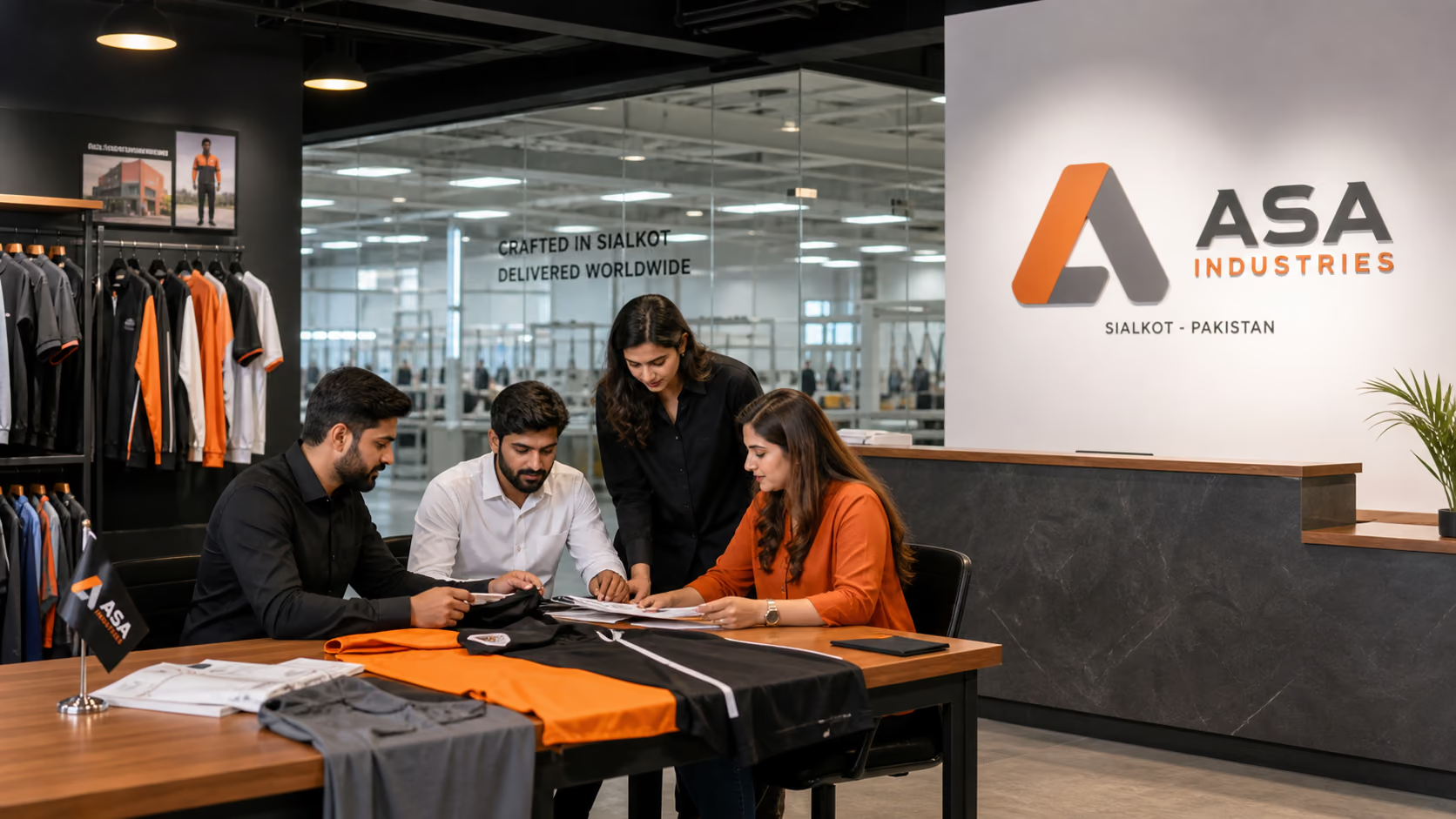
ASA Industries supports custom apparel development from sampling and revisions through production, quality checks, packing and export preparation.
For private-label clothing, sportswear, teamwear and other custom apparel, buyers can provide their tech pack, product specifications, quantity, sizing, colors, logo files and packaging requirements for review.
The production requirements can then be confirmed before bulk manufacturing begins.
## Final Checklist for Clothing Brands
Before approving your next bulk order, make sure you have:
☐ Approved the fabric ☐ Approved the sample ☐ Checked measurements and fit ☐ Confirmed colors ☐ Approved embroidery or printing ☐ Confirmed trims and hardware ☐ Approved labels ☐ Confirmed packaging ☐ Documented any sample revisions ☐ Agreed on the production quality requirements
A strong sample-to-bulk process does not depend on one final inspection alone. It starts with clear specifications, continues through sample approval and production controls, and ends with a final quality check before shipment.
## Need a Custom Clothing Manufacturer?
If you are developing a new clothing collection or private-label product, send ASA Industries your tech pack, product details, quantity, sizing, colors and branding requirements for a customized quotation.
Common questions.
Production brief / quotation / export
Ready to start your production brief?
Tell us your product, quantity and timeline — our team will respond with a tailored quotation for your order.