Custom Leggings Buying Guide | ASA Industries
How to Choose Custom Leggings for Your Activewear Brand
Choosing the right leggings for an activewear collection involves more than selecting a colour and adding a logo. For brands, retailers, gyms and private-label businesses, the right product needs to combine fit, fabric performance, comfort, durability, branding and consistent manufacturing.
From high-waisted gym leggings and full-length workout leggings to color-block activewear and custom private-label designs, every detail can affect how the finished product looks and performs.
This guide explains what buyers should consider when developing custom leggings for an activewear collection.
1. Start With the Purpose of the Leggings
Before choosing fabric or colours, define how the leggings will be used.
Gym leggings may require support, stretch recovery and durability for repeated training. Yoga and studio leggings generally place greater emphasis on flexibility, comfort and a soft hand feel. Running leggings may require moisture management, secure construction and practical features such as pockets.
For everyday activewear and athleisure collections, brands may prioritise a combination of comfort, flattering fit and modern styling.
Defining the intended use helps determine the appropriate fabric, construction, waistband, compression level and features.
2. Choose the Right Legging Fit
Fit is one of the most important decisions when developing women's activewear.
Popular options include:
High-waisted leggings Full-length leggings 7/8 leggings Compression leggings Yoga leggings Gym leggings Running leggings Sculpting leggings Seamless leggings Color-block leggings
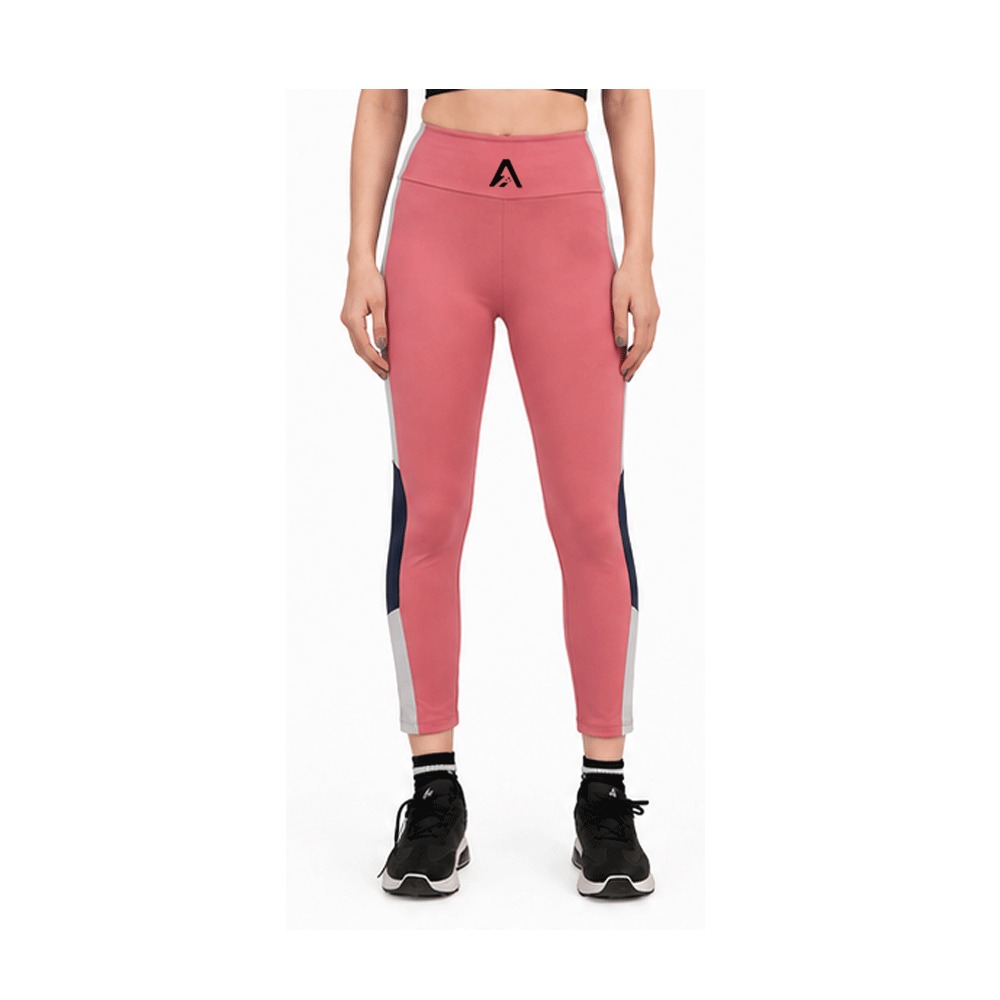
The high-waisted construction shown in this product provides a clean, supportive silhouette and works well for fitness, training and lifestyle activewear collections.
Brands should also establish a clear size chart before sampling. Measurements should cover waist, hip, rise, inseam and leg opening where appropriate.
3. Fabric Selection Matters
Leggings require fabric that can stretch repeatedly while maintaining shape.
Depending on the intended product, brands may consider performance blends such as nylon/spandex or polyester/spandex. The final choice should be based on the required hand feel, stretch, recovery, opacity, durability, colour performance and target price.
A fabric should not be selected only because it feels soft.
For leggings, buyers should evaluate:
Stretch and recovery Fabric weight Opacity under stretch Hand feel Moisture management Shape retention Colour consistency Durability Pilling resistance Performance after repeated wear
Current activewear manufacturing guidance places particular emphasis on stretch recovery, opacity, waistband performance and fit consistency because these characteristics directly affect the finished leggings.
4. Check Opacity and Stretch Performance
One of the most important quality checks for activewear leggings is how the fabric behaves when stretched.
A fabric that looks opaque when relaxed may become more transparent during movement. For this reason, brands should test the fabric under realistic stretch before approving it for bulk production.
Depending on the product's intended use, buyers may also request performance testing for:
Squat opacity Stretch recovery Waistband recovery Seam strength Colourfastness Pilling Repeated-wear durability
The exact fabric weight and construction should be confirmed during sampling rather than assumed from appearance alone.
5. Pay Attention to the Waistband
The waistband can significantly affect the comfort and fit of leggings.
High-waisted leggings are popular because they provide greater coverage around the waist and create a clean silhouette. However, the waistband should be developed so that it stays secure during movement without creating excessive pressure.
Important considerations include:
Waistband height Elastic construction Recovery Waistband width Seam construction Rise measurement Fit across different sizes
A well-developed waistband should remain stable during movement and maintain its shape after repeated wear.
6. Color Blocking Can Create a Stronger Product Identity
Color-block leggings can give an activewear collection a more distinctive visual identity.
The design shown with this product combines a primary body colour with contrasting side panels, creating a sporty and structured appearance.
Brands can customise:
Main body colour Side panels Lower-leg panels Waistband colour Contrast stitching Logo placement Printed graphics Label details
For a private-label collection, colour combinations can also be developed around the brand's existing identity.
7. Decide Where Branding Should Go
Custom leggings can be developed with different branding approaches depending on the design and fabric.
Possible branding options may include:
Heat-transfer logos Silicone logos Printed branding Woven labels Waistband branding Hang tags Custom care labels Branded packaging
For stretch garments, branding placement should be reviewed carefully so the logo remains clean when the fabric moves.
8. Sampling Should Come Before Bulk Production
A professional custom leggings project should not move directly from an image or concept to bulk production.
A sample allows the buyer to review:
Overall fit Waistband position Leg length Fabric stretch Opacity Colour Side-panel placement Stitching Logo placement Finishing Size grading
After sample approval, the approved specifications should become the reference for bulk production.
This helps reduce differences between the approved sample and the final production run.
9. Private Label Leggings for Activewear Brands
Private-label leggings allow brands to develop products under their own identity without building their own manufacturing facility.
Depending on the manufacturing program, private-label services can include:
Custom colours Custom sizing Logo application Woven labels Care labels Hang tags Custom packaging Product development Sampling Bulk manufacturing
This approach is useful for established activewear brands as well as businesses launching a new fitness or athleisure collection.
10. What Should You Send to a Leggings Manufacturer?
A buyer does not always need a complete technical pack to begin a discussion.
A manufacturer can often start from:
Reference image Product sketch Existing garment Logo Colour references Size chart Fabric preference Quantity requirement Branding requirements Packaging requirements
For a more accurate quotation, provide the desired quantity, colour breakdown and size distribution along with the design specifications.
11. Questions to Ask Before Ordering Custom Leggings
Before selecting a supplier, buyers should ask:
Can you develop a sample before bulk production?
Can the fabric be customised?
Can you provide different colours and colour-block combinations?
Can you follow a buyer-provided size chart?
Can you add private-label labels and packaging?
How is fabric opacity checked?
How is sample approval handled?
What is the MOQ per design or colour?
What quality-control process is used before shipment?
These questions help buyers compare manufacturers based on the actual requirements of their product rather than price alone.
Why Choose ASA Industries for Custom Leggings?
ASA Industries supports custom apparel and activewear development for brands looking for product-specific manufacturing rather than standard off-the-shelf garments.
Custom leggings can be developed according to the buyer's requirements for design, colour, sizing, branding and production specifications. Buyers can provide a reference image, sketch, logo or existing sample for product development and sampling.
The goal is to take a leggings concept from initial design through sample approval and bulk production while keeping the approved specifications clear throughout the process.
For activewear brands developing a new leggings collection, custom colour-block styles, gym leggings, fitness leggings and other women's performance apparel can be developed as part of a broader private-label collection.
Final Buying Checklist
Before approving custom leggings for production, make sure you have confirmed:
Product purpose Fit and rise Size chart Fabric composition Fabric weight Stretch and recovery Opacity Waistband construction Seam construction Colour standards Panel placement Logo placement Labels Packaging Sample approval Bulk quality requirements
A well-planned product specification gives both the brand and manufacturer a clearer production target and can help reduce avoidable revisions during sampling and bulk manufacturing.
Final Call to Action
Share your custom leggings design, required quantity, colours, sizes, fabric preferences, branding details, and other specifications with ASA Industries to start a tailored manufacturing quotation for your activewear collection.
Common questions.
Production brief / quotation / export
Ready to start your production brief?
Tell us your product, quantity and timeline — our team will respond with a tailored quotation for your order.