
How to Build a Production-Ready Clothing Tech Pack
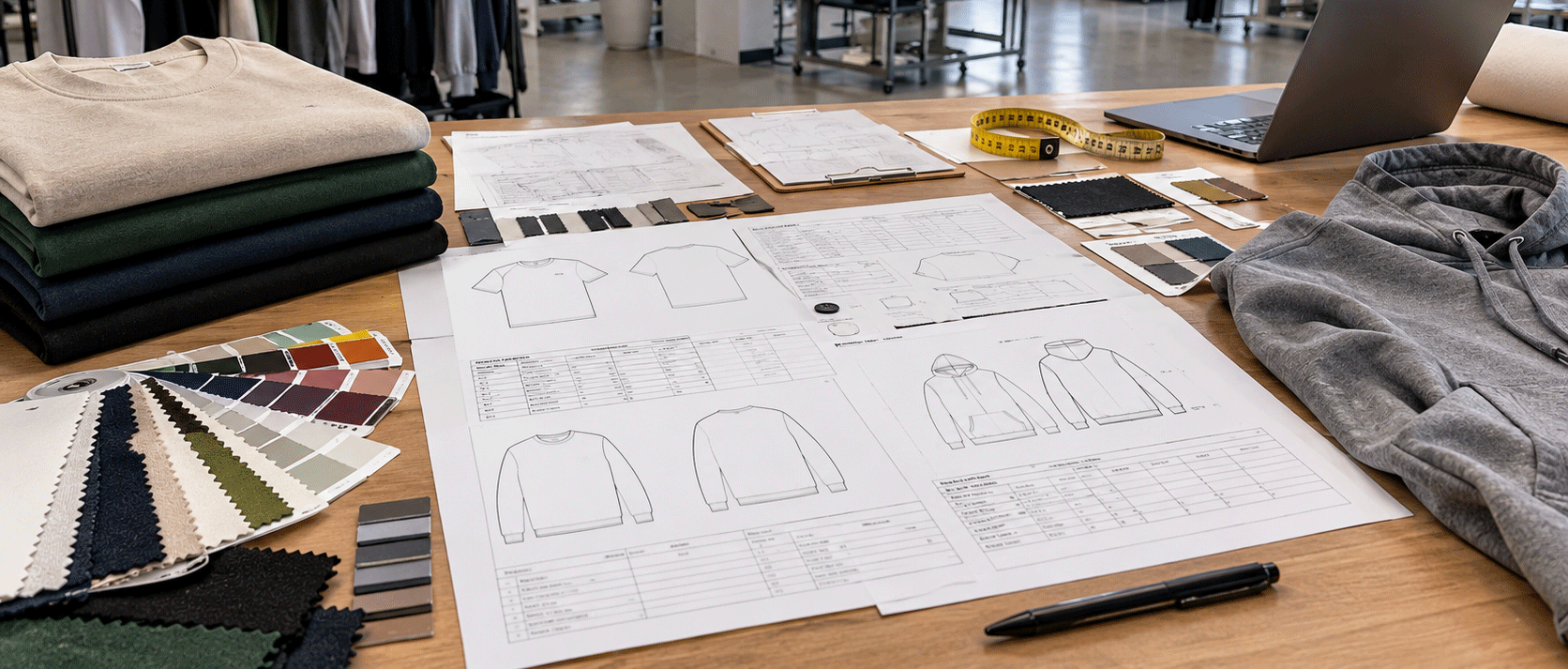
How to Build a Production-Ready Clothing Tech Pack
Turning a clothing idea into a finished product requires more than a sketch or reference image. A clothing tech pack gives a manufacturer the technical information needed to understand how the garment should be developed, sampled, and produced.
For clothing brands, private-label businesses, sportswear companies, and apparel startups, a clear tech pack can reduce misunderstandings during sampling and make the transition from an approved sample to bulk production much smoother.
A production-ready tech pack should communicate the product clearly enough that the manufacturer does not have to guess about important details.
What Is a Clothing Tech Pack?
A clothing tech pack is a technical document that brings together the key specifications for a garment.
Depending on the product, it can include:
Technical garment drawings Measurements Size specifications Fabric composition GSM or fabric weight Colors and Pantone references Construction details Stitching requirements Trims and accessories Logo placement Embroidery or printing artwork Labels Packaging requirements Quality requirements
A good tech pack turns a creative clothing concept into a clearer production brief that can be reviewed by a manufacturer before sampling.
Why Does a Tech Pack Matter Before Sampling?
A manufacturer needs more than a product photo to understand how a garment should be produced.
For example, a reference image may show the general appearance of a hoodie, polo, tracksuit, or sports jersey, but it may not explain:
What fabric should be used? What GSM is required? How should the garment fit? Where should the logo sit? What are the finished measurements? What type of stitching is required? Which labels should be added? How should the garment be packed?
The clearer these requirements are, the easier it is to review the sample against the original product brief.
This is particularly important when a brand plans to move from one approved sample into larger production.
What Should a Production-Ready Clothing Tech Pack Include? 1. Product Information
Start with basic product information.
Include:
Product name Style number Product category Intended use Target customer Gender Fit Collection or drop name
For example:
Style: ST-001 Product: Technical Trouser Fit: Tapered Category: Workwear
This gives the manufacturer a clear reference for the product from the beginning.
2. Front and Back Technical Drawings
Your tech pack should show the garment clearly from the relevant views.
Depending on the product, this may include:
Front Back Side Inside Close-up construction details
Technical flats are especially useful because they show garment construction without relying on a model or fashion photograph.
For complicated products, add enlarged detail drawings for pockets, collars, cuffs, seams, zippers, panels, or other important areas.
3. Garment Measurements
Measurements are one of the most important parts of a clothing tech pack.
Depending on the garment, you may need to specify:
Chest Body length Shoulder width Sleeve length Waist Hip Inseam Outseam Rise Leg opening
Each measurement should have a clear point of measurement.
This helps the manufacturer understand exactly where and how the measurement should be taken.
4. Size Specifications and Grading
If your product will be manufactured in several sizes, provide a size chart.
For example:
XS / S / M / L / XL / XXL
The tech pack should explain how measurements change between sizes.
For larger production runs, proper grading helps maintain the intended fit across the complete size range rather than developing only one size and scaling it without clear specifications.
5. Fabric and GSM
Fabric information should be as specific as possible.
Include:
Fiber composition Fabric construction GSM Stretch requirement Finish Hand feel Performance requirements Color
For example:
Fabric: 80% Cotton / 20% Polyester Weight: 350 GSM Construction: Brushed-back fleece Finish: Pre-shrunk
The exact specification depends on the product.
A hoodie, compression garment, football jersey, golf polo, technical trouser, and luxury tracksuit will not require the same fabric characteristics.
6. Colors and Pantone References
Avoid describing colors only as:
“Dark blue” “Light beige” “Off-white”
Where possible, provide a Pantone reference or physical color standard.
This becomes especially important when a product has multiple color panels.
For example:
Main body: Pantone reference Contrast panel: Pantone reference Logo: Pantone reference
Clear color references make sample approval and repeat production easier to manage.
7. Construction Details
This section explains how the garment should actually be made.
Depending on the product, specify:
Seam construction Stitch type Seam allowance Hem finish Collar construction Cuff construction Pocket construction Waistband Zipper construction Reinforcement Topstitching
If a particular construction detail is important to the garment's durability or appearance, show it with a close-up drawing.
8. Printing and Embroidery
If your garment includes branding, provide the actual artwork whenever possible.
Specify:
Logo artwork Logo dimensions Placement Embroidery type Thread colors Print method Print dimensions Pantone references Number of locations
For example:
Left chest logo — 80 mm wide — embroidery
is much clearer than:
“Put our logo on the chest.”
9. Labels and Branding
Private-label clothing requires clear branding instructions.
Your tech pack can specify:
Main neck label Size label Care label Country-of-origin label where required Woven label Printed label Hangtag Brand packaging
Also specify the position and dimensions of each label.
This is particularly important for brands that want their finished garments to be retail-ready.
10. Trims and Accessories
Do not overlook small components.
Depending on the garment, include:
Zippers Buttons Snaps Drawcords Eyelets Elastic Buckles Cord ends Patches Reflective details Custom hardware
For custom hardware, provide reference images, dimensions, finish and branding requirements where applicable.
11. Packaging Requirements
If you are selling through a webshop, retail store, distributor, or private-label channel, packaging can be part of the product specification.
Your tech pack can include:
Individual polybag Size sticker Barcode Hangtag Tissue paper Branded bag Carton requirements Folding instructions
Packaging should be discussed before bulk production rather than added at the last moment.
12. Quality Requirements
Your tech pack should also communicate what quality means for the product.
Depending on the garment, this may include:
Measurement tolerances Color consistency Stitching quality Seam strength Print quality Embroidery quality Fabric defects Shrinkage requirements Wash testing Performance requirements
The more important a specification is to the final product, the more clearly it should be documented.
Common Clothing Tech Pack Mistakes
Even when a brand has a tech pack, production problems can still happen when important information is missing.
Common mistakes include:
Missing measurements A design drawing alone does not define garment fit.
Unclear fabric specifications “Premium cotton” is not enough to define a production fabric.
No color reference Visual colors on a screen can vary.
Unclear logo placement Always provide dimensions and placement references for important branding.
Missing label specifications Specify label type, size, position, and artwork.
No size grading A complete size range needs clear specifications.
Unclear construction details Important seams, pockets, collars, cuffs, and trims should be documented.
Old versions of the tech pack Always make sure the manufacturer is working from the latest approved version.
Tech Pack vs Reference Image: What Is Better?
A reference image is useful, but it does not always provide enough information for production.
A reference image can communicate:
Overall appearance Style direction Color inspiration General fit Design details
A tech pack can communicate:
Exact measurements Materials Construction Branding placement Size specifications Labels Packaging Production requirements
For complex garments, the strongest development process often combines a tech pack + reference images + clear product requirements.
What Happens After the Tech Pack?
Once the product specifications are clear, the next stage is normally sampling.
A typical development workflow is:
Product Brief → Technical Specifications → Material Review → Sampling → Sample Review → Revision → Approval → Bulk Production → Quality Control → Packing & Export
At ASA Industries, this workflow is part of the broader custom apparel development process, including material and construction direction, sampling, review, revision, approval, bulk production and quality control.
ASA's existing sampling guide also explains that the sample stage is where fit, fabric and construction should be checked before bulk production.
Can a Manufacturer Help Develop a Tech Pack?
Yes, depending on the manufacturer's product-development capabilities.
A brand may start with:
Sketch Reference garment Reference images Measurements Product concept Fabric preference Branding artwork
The manufacturer or product-development team can then help clarify materials, construction, measurements, sampling requirements and production details.
For brands without a complete technical package, discussing the product requirements with the manufacturer before sampling can help identify missing information.
How ASA Industries Works With Clothing Brands
ASA Industries supports international B2B buyers through the product-development and manufacturing process, from product brief and specification confirmation through sampling, revision, approval, bulk production, quality control, packing and export preparation.
The company works with sportswear, teamwear, private-label apparel and custom clothing projects, allowing buyers to develop products around their own specifications, branding and production requirements.
If you already have a tech pack, reference images, product measurements, logo files or a physical reference garment, these can be used to discuss the next stage of development.
Final Clothing Tech Pack Checklist
Before sending your tech pack to a manufacturer, check that you have included:
☑ Product name and style number ☑ Front and back technical drawings ☑ Measurements ☑ Size chart and grading ☑ Fabric composition ☑ GSM / fabric weight ☑ Color references ☑ Pantone references where required ☑ Construction details ☑ Stitching requirements ☑ Logo artwork ☑ Embroidery / printing specifications ☑ Labels ☑ Trims and hardware ☑ Packaging requirements ☑ Quality requirements ☑ Measurement tolerances ☑ Latest revision/version
A complete specification makes it easier for both the brand and manufacturer to work from the same product requirements.
Ready to Develop Your Clothing Product?
If you are preparing a new clothing collection, private-label range, teamwear program, or custom sportswear product, send ASA Industries your tech pack, product design, quantity, sizing, colors, branding requirements and target timeline.
Request a Production Quote from ASA Industries and discuss the next step for sampling and manufacturing.
Common questions.
Production brief / quotation / export
Ready to start your production brief?
Tell us your product, quantity and timeline — our team will respond with a tailored quotation for your order.