MOQ Guide: Minimum Order Quantities Explained
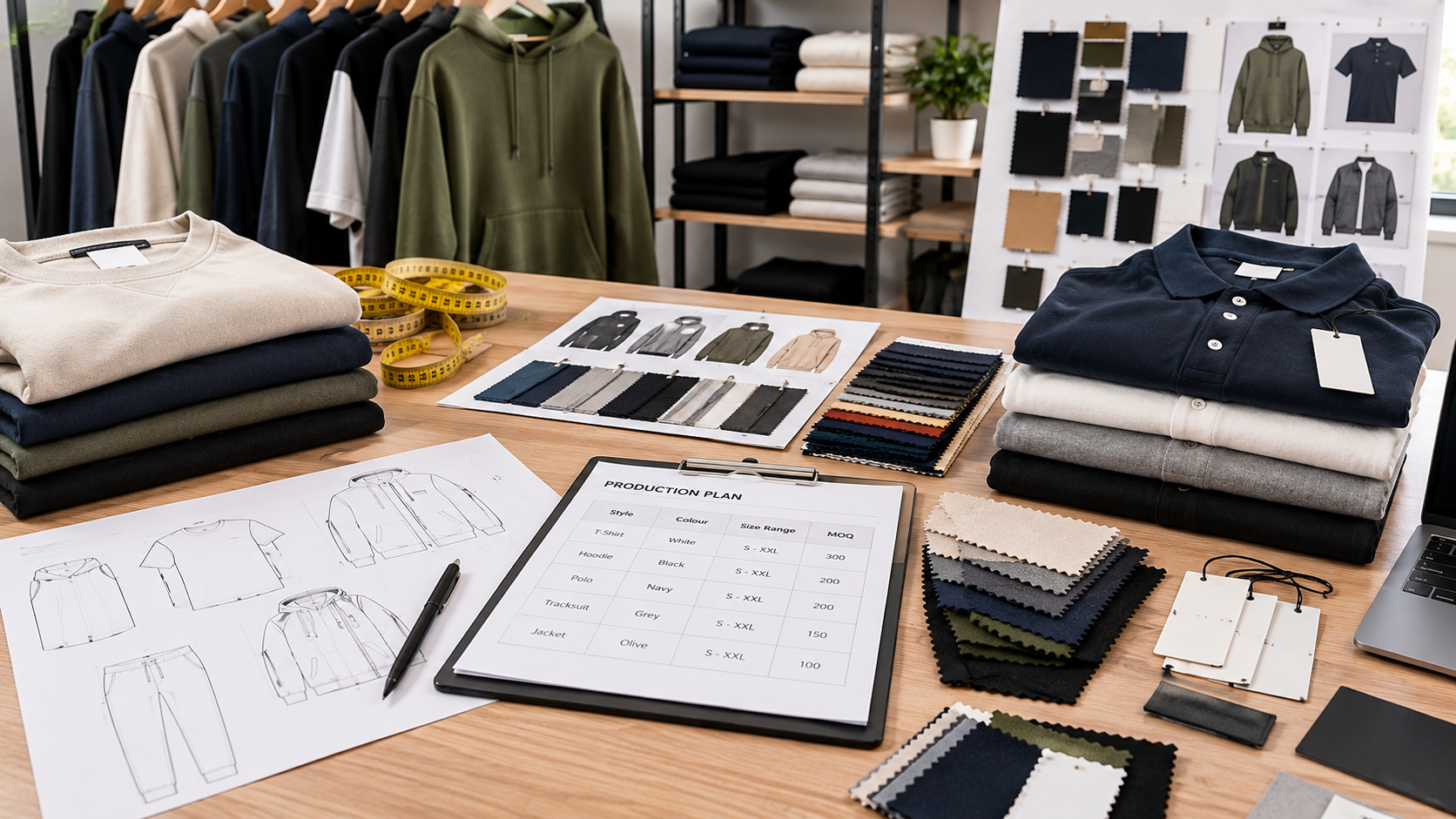
Clothing MOQ Guide: Minimum Order Quantities Explained
Choosing the right clothing manufacturer is an important step for fashion brands, sportswear businesses, startups, and established apparel companies. Before starting production, one of the first things buyers need to understand is MOQ (Minimum Order Quantity).
Whether you are launching a clothing brand, developing custom sportswear, or sourcing private-label apparel, understanding clothing MOQ helps you plan your budget, manage inventory, and make better production decisions.
In this guide, ASA Industries explains how minimum order quantities work, which factors affect them, how to plan your first order, and what to consider when choosing a custom clothing manufacturer.
What Is MOQ in Clothing Manufacturing?
MOQ stands for Minimum Order Quantity. It refers to the minimum number of units a manufacturer requires for a particular production order.
For example, a manufacturer may set a minimum quantity for a specific garment design, colour, or production run. The actual MOQ depends on the product, fabric availability, customization requirements, and manufacturing process.
Clothing MOQ is particularly important for:
New clothing brands preparing their first collection Sports teams ordering custom uniforms and teamwear Businesses developing private-label apparel Retailers sourcing garments for resale Established brands planning bulk clothing production
Understanding the MOQ before requesting a quotation helps you determine whether a manufacturer is suitable for your order size and business requirements.
Why Do Clothing Manufacturers Set MOQs?
Clothing manufacturers set minimum order quantities to manage production efficiently and control manufacturing costs.
Several factors contribute to these requirements.
Fabric Sourcing and Availability
Manufacturers may need to source specific fabrics, colours, weights, and constructions for a production order. Custom-dyed or specially developed fabrics can have different minimum purchasing requirements from readily available materials.
Production Setup
Preparing patterns, cutting layouts, sewing operations, printing screens, embroidery files, and other production processes requires time and resources. Larger production quantities can help distribute certain setup costs across more garments.
Custom Branding and Finishing
Private-label clothing may require custom neck labels, woven labels, hangtags, packaging, embroidery, or printed artwork. Some of these components have their own minimum order requirements.
Production Efficiency
Producing a planned quantity of the same garment can help manufacturers organize fabric cutting, stitching, finishing, and quality control more efficiently.
For this reason, MOQ should be evaluated alongside product quality, customization options, pricing, and the manufacturer's ability to meet your specifications.
What Factors Affect Clothing MOQ?
Minimum order quantities are not the same for every garment. Before requesting a quote, consider the following factors.
1. Garment Type and Construction
A basic T-shirt may have different production requirements from a technical sports jersey, insulated jacket, cycling garment, or performance hoodie. Complex garments can involve additional materials, components, and manufacturing operations.
2. Fabric Type and Weight
Fabric composition, GSM, construction, colour availability, and sourcing requirements can influence the minimum quantity. Specialized performance fabrics and custom-developed materials may require additional planning.
3. Colours and Designs
Multiple colours or designs can affect fabric purchasing, cutting plans, printing, and production setup. Ask your manufacturer whether different colours or designs can be combined within the proposed order quantity.
4. Sizes and Size Distribution
A clothing order may include several sizes, such as S, M, L, XL, and XXL. Confirm how the manufacturer handles size distribution and whether the minimum quantity applies to the complete order or individual variations.
5. Branding and Customization
Embroidery, screen printing, heat transfers, patches, custom labels, and branded packaging can affect production requirements. Providing final artwork and clear branding specifications helps the manufacturer assess your order accurately.
6. Packaging and Special Requirements
Individual garment bags, custom boxes, retail-ready packaging, special finishing, and other requirements may influence costs and minimum quantities.
Practical tip: When requesting a clothing manufacturing quotation, provide your product type, estimated quantity, colour options, size breakdown, fabric preferences, and branding requirements. Clear specifications make it easier to receive a relevant quotation.
Can You Mix Sizes and Colours Within an MOQ?
Many buyers want to order several sizes or colours without committing to a separate large order for every variation.
Whether this is possible depends on the manufacturer's production policy and the materials required.
Before confirming your order, ask:
Can I combine multiple sizes within the total order quantity? Can I select more than one colour for the same design? Does each colour have a separate minimum quantity? Can different designs share the same production order? Are custom fabrics or trims subject to additional minimums?
For example, a brand may want one design in navy, black, and white, with a range of sizes. The manufacturer should clarify how the order can be divided and whether each colour or design must meet a separate minimum.
Do not assume that all variations can automatically be combined. Confirm the production breakdown before approving your quotation.
How Does MOQ Affect Clothing Prices?
MOQ and unit pricing are closely related, but the relationship depends on the product and production requirements.
A larger order may reduce certain per-unit costs because setup, sourcing, and other production expenses can be distributed across more garments. However, the final price also depends on materials, construction, decoration, packaging, and order complexity.
When comparing clothing manufacturers, evaluate more than the quoted price per piece.
Consider:
Fabric quality and specifications Stitching, finishing, and construction Custom branding and label options Packaging requirements Sample development costs Shipping terms and delivery arrangements Quality control and communication
A low unit price may not represent the best overall value if the product does not meet your quality requirements. Request a quotation based on the same specifications when comparing suppliers.
How to Plan Your First Clothing Production Order
If you are starting a clothing brand or developing a new product, careful planning can help reduce unnecessary costs and production complications.
Step 1: Finalize Your Product Concept
Decide which garments you want to manufacture, such as T-shirts, hoodies, sports jerseys, tracksuits, cycling apparel, or technical outerwear.
Step 2: Prepare Your Design and Specifications
Share reference images, sketches, measurements, a size chart, fabric preferences, colour codes, and artwork where available. The more clearly you describe the product, the easier it is to assess feasibility.
Step 3: Establish Your Budget and Quantity
Determine your target order quantity and budget. Include product manufacturing, branding, packaging, shipping, and any applicable import costs when calculating your total investment.
Step 4: Confirm MOQ and Production Terms
Ask whether the minimum applies per style, colour, or order. Also confirm payment terms, sample charges, production timelines, and shipping arrangements before proceeding.
Step 5: Review Samples Where Appropriate
A sample can help you assess fit, fabric feel, construction, colours, and branding before approving bulk production. Agree on the sample scope and timeline with your manufacturer.
Step 6: Approve the Final Specifications
Before production begins, confirm the approved design, measurements, materials, size breakdown, colours, labels, and packaging details in writing.
Good preparation helps create a clearer process for both the buyer and manufacturer.
MOQ vs. Sample Orders: What Is the Difference?
A sample order and a bulk production order serve different purposes.
A sample order is used to evaluate a garment's design, fit, materials, construction, and branding before committing to a larger production run.
A bulk order is the main production quantity manufactured according to the approved specifications.
Sample development may have separate costs and minimum requirements because the garment still needs pattern preparation, materials, and manufacturing time. Ask whether sample charges can be credited toward a future bulk order rather than assuming this is included.
For new brands, reviewing a sample before bulk production can help identify adjustments early and reduce the risk of approving a product that does not match expectations.
How to Choose the Right Clothing Manufacturer
Finding a suitable clothing manufacturer involves more than finding the lowest MOQ or price. Your supplier should understand your product requirements and communicate clearly throughout development and production.
Before choosing a manufacturer, evaluate the following points.
Product Experience
Look for a manufacturer whose capabilities match your garment category, whether that is sportswear, teamwear, casual clothing, outerwear, or technical performance apparel.
Customization Capabilities
Confirm whether the manufacturer can support your required fabrics, colours, sizing, embroidery, printing, labels, and private-label packaging.
Quality and Sampling Process
Ask how product specifications are reviewed, how samples are approved, and how quality is checked during production.
Transparent Quotations
A useful quotation should clearly describe the product specifications, quantity, customization, applicable costs, payment terms, and shipping arrangements.
Communication and Production Planning
Choose a supplier who responds clearly to questions, identifies requirements early, and provides realistic timelines based on the order's complexity.
A reliable manufacturing relationship begins with clear expectations and a shared understanding of the final product.
Why Choose ASA Industries for Custom Apparel Manufacturing?
ASA Industries is a custom apparel manufacturer based in Sialkot, Pakistan, supporting businesses looking to develop garments for their own brands, teams, and organizations.
Our product capabilities include custom sportswear, teamwear, casual apparel, fitness and performance clothing, outerwear, and private-label apparel projects.
Depending on the product and requirements, customization can include fabric selection, colours, sizing, garment construction, embroidery, printed designs, labels, and branding details.
We understand that every project has different requirements. Our approach starts with reviewing your product concept, estimated quantity, material preferences, and customization needs to determine the appropriate production options.
When discussing a project with ASA Industries, you can share:
Your product type and reference images Estimated order quantity Preferred fabric and garment specifications Available colours and size breakdown Logo artwork and private-label requirements Packaging and shipping destination
This information helps us evaluate your requirements and prepare a quotation for your project. Sample development can also be discussed where appropriate.
Whether you are developing a new apparel collection or sourcing custom garments for an established business, clear communication and well-defined specifications are essential for a successful manufacturing process.
Frequently Asked Questions About Clothing MOQ What does MOQ mean in clothing?
MOQ means Minimum Order Quantity. It is the minimum number of garments a manufacturer requires for a particular order, style, colour, or production run, depending on its policy.
What is a typical MOQ for custom clothing?
There is no universal MOQ for custom clothing. It varies according to garment type, fabric availability, production complexity, branding, and the manufacturer's capabilities. Request a product-specific quotation to confirm the applicable minimum.
Can I order custom clothing for a new brand?
Yes, you can approach manufacturers with a new brand concept. Before proceeding, discuss minimum quantities, sample development, customization, budget, and production requirements.
Can I mix sizes in one clothing order?
Size mixing may be possible, depending on the manufacturer's production policy and the product specifications. Confirm the size breakdown before placing your order.
Can I order multiple colours within one MOQ?
Some manufacturers allow colour combinations within an order, while others set minimum quantities for each colour. Fabric sourcing and production setup can affect the available options.
Does private-label clothing have a different MOQ?
Private-label requirements can affect MOQ because custom labels, packaging, fabric selection, and other branding components may have separate minimum requirements. The exact quantity depends on the project.
Should I request a sample before bulk production?
A sample is useful for checking fit, materials, construction, and branding before bulk production. Discuss sample costs, development time, and approval requirements with the manufacturer.
How can I request a custom clothing quotation from ASA Industries?
Share your garment type, estimated quantity, design references, fabric preferences, colours, sizes, and branding requirements. ASA Industries can review the details and discuss suitable manufacturing options.
Request a Custom Apparel Manufacturing Quotation
Planning a clothing collection, sportswear range, teamwear order, or private-label apparel project? Start by defining your product specifications and estimated quantity.
Contact ASA Industries to discuss your requirements and request a custom apparel quotation.
Email: asaindustriespk@gmail.com WhatsApp: +92 300 9610181
Share your product reference, estimated quantity, fabric preferences, and branding requirements to start a conversation about your custom apparel project.
ASA Industries — Custom Apparel Manufacturing
Common questions.
Production brief / quotation / export
Ready to start your production brief?
Tell us your product, quantity and timeline — our team will respond with a tailored quotation for your order.