
What GSM Is Best for Hoodies?
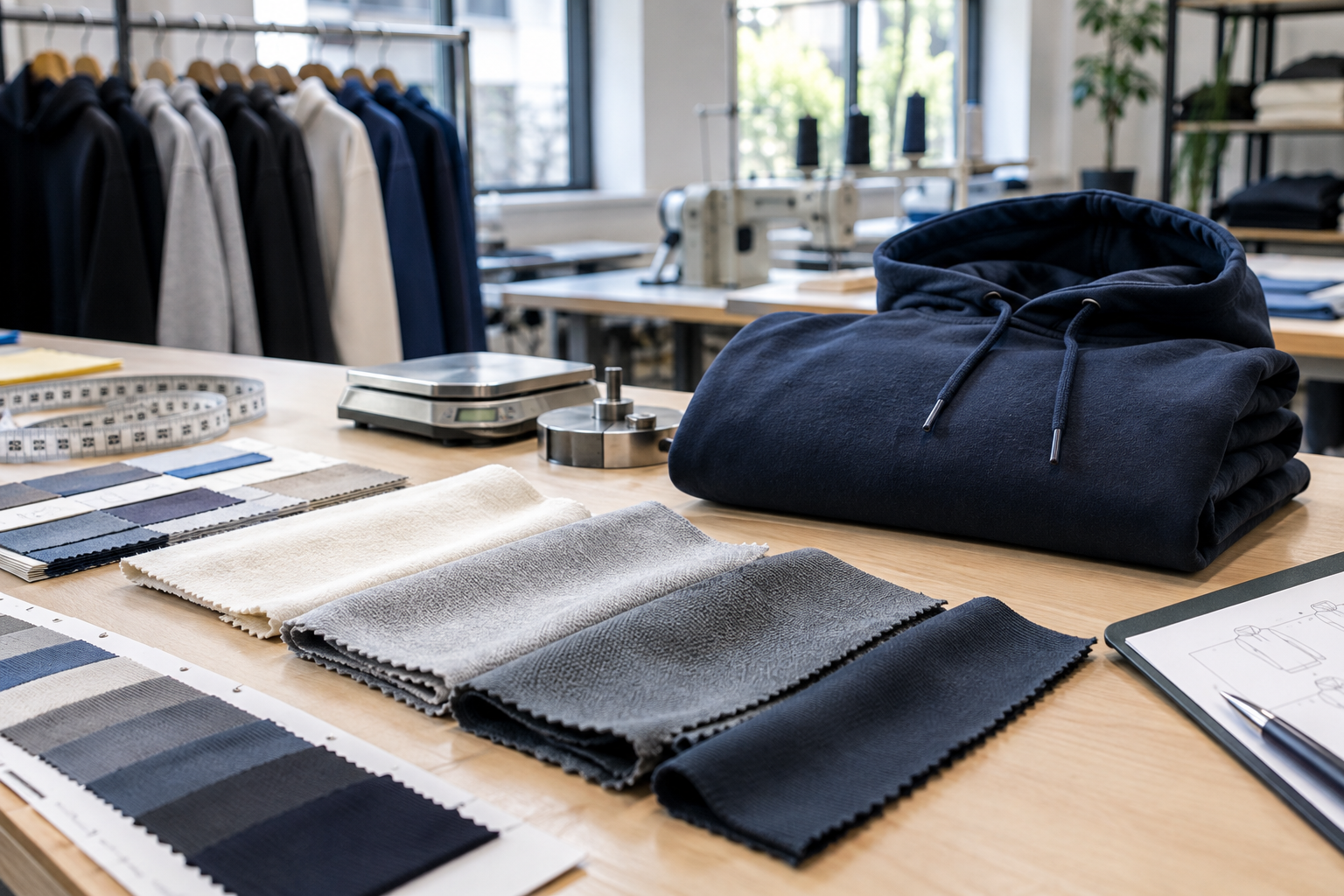
What GSM Is Best for Hoodies? A Manufacturer's Guide
Choosing the right fabric weight is an important step when developing hoodies for a clothing brand. The fabric affects how a hoodie feels, drapes, holds its shape and performs in different conditions.
GSM, or grams per square metre, is one of the most common measurements used to specify fabric weight. But a higher GSM does not automatically mean better quality. Fabric construction, fibre composition, finishing and garment design also affect the final result.
For brands developing custom hoodies, private-label collections or heavyweight streetwear, understanding these differences can make product development more straightforward.
What Does GSM Mean in Hoodie Fabric?
GSM stands for grams per square metre. It measures the weight of one square metre of fabric.
For example, a 350 GSM fabric weighs 350 grams per square metre. A 400 GSM fabric weighs 400 grams per square metre.
GSM helps clothing brands communicate their fabric requirements to manufacturers. However, it does not measure softness, durability or warmth by itself.
Two hoodie fabrics with the same GSM may feel very different because of their fibre content, knit structure, brushing and finishing.
What GSM Is Best for Hoodies?
There is no single GSM that works best for every hoodie. The right choice depends on the intended use, fit, climate, fabric construction and target customer.
The following ranges are practical starting points for product development, not fixed industry standards.
280 GSM Hoodies: Lightweight Layering
A hoodie around 280 GSM may suit lighter layering garments, mild-weather collections and buyers who prefer a less substantial feel.
Depending on the fabric construction, this weight can offer a more flexible drape than heavier fleece.
Consider this range for:
Lightweight casual hoodies Transitional-season collections Layering pieces Brands targeting a lighter garment feel 320 GSM Hoodies: Everyday Comfort
A fabric around 320 GSM can be a useful starting point for everyday hoodies that need a balance of structure, comfort and weight.
The final result depends on whether the fabric is French terry, brushed fleece or another knit construction.
Consider this range for:
Everyday casualwear Midweight private-label hoodies General lifestyle collections Buyers seeking a balance between weight and wearability 350 GSM Hoodies: Substantial Streetwear Feel
A 350 GSM hoodie can provide a more substantial hand feel than a lighter option. Depending on the knit, composition and finishing, it may work well for streetwear and premium casualwear collections.
Consider this range for:
Streetwear hoodies Relaxed or oversized fits Mid-to-heavyweight collections Brands seeking a structured feel without choosing an extremely heavy fabric
The fit and pattern still matter. GSM alone does not create an oversized silhouette.
400 GSM Hoodies: Heavyweight Construction
A 400 GSM fabric can be suitable for heavyweight hoodies designed to feel substantial and hold a more structured shape.
The actual warmth and drape depend on fabric composition, loop structure, brushing, density and garment construction.
Consider this range for:
Heavyweight streetwear Premium casualwear collections Colder-weather garments Buyers looking for a heavier fabric hand feel
Before selecting this weight, consider garment weight, intended climate, fabric cost and how the finished hoodie will feel when worn.
Quick Comparison: 280 vs 320 vs 350 vs 400 GSM
280 GSM: A lighter option for layering and less substantial garments.
320 GSM: A practical starting point for many everyday hoodie developments.
350 GSM: A useful option when a brand wants a more substantial streetwear feel.
400 GSM: A heavier option for structured, heavyweight hoodie collections.
These comparisons are general guidance. A 320 GSM brushed fleece may feel warmer than a 350 GSM unbrushed French terry. Always compare the actual fabrics and finished samples before approving bulk production.
French Terry vs Brushed Fleece: Which Is Better?
GSM is only one part of hoodie fabric selection. The fabric construction is equally important.
French Terry
French terry typically has loops on its inner surface. Depending on the construction, it can provide a comfortable, relatively breathable feel without the raised inner pile of brushed fleece.
It may suit:
Everyday hoodies Transitional-season apparel Athleisure collections Brands looking for a loopback interior Brushed Fleece
Brushed fleece has a raised, soft inner surface. The brushing can improve the perceived softness and warmth of the garment, although the result depends on the fabric itself.
It may suit:
Cold-weather casualwear Comfortable everyday hoodies Heavyweight streetwear Collections where a soft interior is important
Neither construction is universally better. The right choice depends on the desired hand feel, warmth, durability, appearance and target price.
Does Higher GSM Mean Better Hoodie Quality?
No. Higher GSM means greater fabric weight per square metre, not automatically higher quality.
A well-made 320 GSM hoodie may be more suitable for everyday use than a very heavy hoodie that feels too warm or stiff for its intended market.
Other factors to consider include:
Fibre composition and yarn quality Knitted fabric construction Surface appearance and hand feel Shrinkage after washing Pilling resistance Colourfastness Seam and stitch quality Cuff, hem and waistband recovery Fit and pattern construction
A good product specification considers these factors alongside GSM.
How to Choose Hoodie GSM for Your Target Market
Before selecting a fabric, consider who will wear the hoodie and how it will be used.
For everyday casualwear: Start by comparing lighter and midweight options.
For streetwear: Consider the desired drape, oversized fit and substantial hand feel, then evaluate suitable midweight and heavyweight fabrics.
For colder conditions: Review the fabric construction, inner surface and overall garment design rather than relying on GSM alone.
For private-label brands: Compare fabric options against your target retail positioning, customer expectations and production budget.
For custom collections: Specify the intended use, fabric composition, target GSM, fit and finishing requirements before sampling.
What Should You Tell Your Hoodie Manufacturer?
Instead of asking for a “premium hoodie,” provide clear technical requirements.
Your product brief should include:
Product type: pullover hoodie or zip-up hoodie Target GSM or acceptable weight range Preferred composition, such as cotton or a cotton-polyester blend Fabric construction: French terry or brushed fleece Fit: regular, relaxed, oversized or boxy Colour and colour references Logo artwork and placement Rib, drawcord, zipper and pocket requirements Size chart and grading Label and packaging requirements Reference images or a physical sample
If you are unsure which fabric is suitable, ask the manufacturer to recommend options and arrange fabric swatches before approving the final specification.
Why Fabric and Sample Approval Matter Before Bulk Production
A written GSM requirement is useful, but it cannot show every characteristic of a fabric.
Before moving to bulk production, review the physical fabric or garment sample. Confirm the hand feel, colour, weight, fit, construction and relevant washing performance against your approved requirements.
Document any changes before production begins. This helps both the buyer and manufacturer work from the same specifications.
How ASA Industries Supports Custom Hoodie Development
ASA Industries works with clothing brands and private-label buyers developing custom apparel. Hoodie requirements can be reviewed according to the product brief, preferred fabric, target GSM, design, branding and order quantity.
The development process can include requirement review, fabric selection, sampling, revisions, approval and bulk production planning.
If you are developing a hoodie collection, prepare your reference images or tech pack, target quantity, size range, preferred fabric and branding details before requesting a quotation.
Frequently Asked Questions Is 350 GSM good for a hoodie?
It can be a good option for a substantial everyday or streetwear hoodie, depending on the fabric construction, composition, fit and intended use.
Is 400 GSM too heavy for a hoodie?
Not necessarily. It can suit heavyweight collections, but it may be less appropriate for lightweight layering or warm climates. Review the actual fabric and garment sample.
Is 320 GSM suitable for private-label hoodies?
It can be a useful starting point for many midweight hoodie developments. The best choice depends on the buyer's target market and desired hand feel.
Which is warmer: French terry or brushed fleece?
Brushed fleece often feels warmer because of its raised inner surface, but the actual result depends on construction, fibre composition, density and finishing.
Should I choose GSM before choosing the fabric?
It is better to decide the product's intended use and suitable fabric construction first, then agree on a target GSM with the manufacturer.
Develop Your Custom Hoodie Collection
The right hoodie fabric is not simply the heaviest option available. It is the fabric that suits your design, target customer, climate, fit and quality requirements.
If you are developing custom hoodies for your clothing brand, share your product specifications, reference images, target quantity and preferred fabric with ASA Industries.
Request a Quote: https://www.asaindustriespk.com/rfq.
Common questions.
Production brief / quotation / export
Ready to start your production brief?
Tell us your product, quantity and timeline — our team will respond with a tailored quotation for your order.